The Exposure of Exposure Therapy
Apr 08, 2026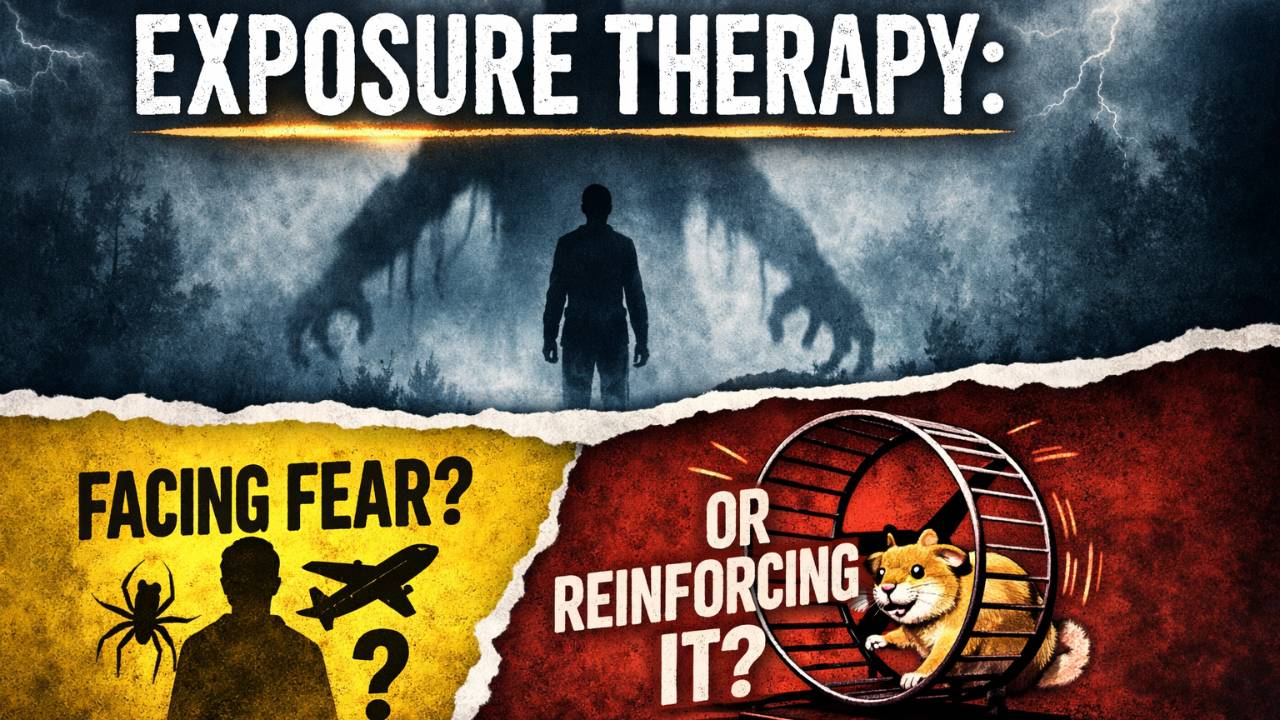
Exposure Therapy: Facing Fear or Reinforcing It?
Exposure therapy is one of the most widely used treatments for anxiety disorders, OCD, and phobias. It’s often described as an evidence-based psychological intervention for anxiety conditions.
But there’s a deeper, more controversial question worth exploring:
Does exposure therapy actually eliminate anxiety, panic, phobias and OCD, does it train you to tolerate them or does it, in fact, make it all far worse?
What Exposure Therapy Promises
At its core, exposure therapy is built on a simple idea:
If you repeatedly face what you fear, your anxiety will eventually decrease.
This process is often explained through habituation—your nervous system gradually becomes less reactive over time.
Examples include:
- Someone with social anxiety initiating conversations repeatedly
- A person with OCD resisting compulsions
- Someone with a phobia confronting feared objects or situations
Some people do report reduced anxiety in these situations but is it tackling the cause or superficially providing low level reassurance?
The Key Assumption: Anxiety Will Fade
Exposure therapy relies on an important assumption:
That repeated exposure will “teach” the brain that the feared situation is safe.
But in most cases, this does mot happen—in fact, despite reassurance-based initial relief, bioogically, exposure actually exacerbates fear disorders.
But even minimal relief raises a critical question: If anxiety needs to be repeatedly reduced through exposure… can it ever be fully resolved?
Tolerance vs. Elimination
One of the main issues with exposure therapy is that it builds low level tolerance, not elimination.
In other words:
- You may learn to handle anxiety
- But the disordered anxiety response itself will still exist
Many people report that:
- Anxiety is lower in specific practiced situations but is not resolved
- Anxiety then resurfaces in new or unexpected contexts
This suggests that the mind may be learning that “This situation is survivable” rather than “There is no threat at all”
The Relapse Question
Another issue often discussed is relapse rates.
If exposure twas truly able to remove the root cause of anxiety, relapse rates would theoretically be low. But in reality:
- Many people require ongoing exposure practice
- Many give up on exposure through lack of results
- Others find symptoms immediately return after stopping structured exercises
So is exposure something you have to keep doing to maintain any results at all?
If so, it is, at very best, coping and not resolution.
When Exposure Feels Like a Struggle
For many individuals, exposure therapy can feel:
- Overwhelming
- Forced
- Mentally exhausting
- Like it's making things worse
- Pressurised by the expectations of the 'practitioner'
While gradual exposure is designed to be manageable, the process still involves repeatedly triggering anxiety on purpose which is the most counter-productive process you can follow. It can ONLY make things worse.
This:
- Reinforces the idea that anxiety is something dangerous that must be “worked through”
- Keeps attention locked onto fear and symptoms
- Perpetuates the fear response
Instead of fading into the background, anxiety will be perpetuated by exposure therapy.
Does Repetition Address the Root Cause?
A central debate is whether exposure therapy addresses the cause of anxiety—or just the response to it.
- Anxiety is disordered fear NOT fear
- Exposure claims to address the fear response in order to correct anxiety
- Fear is not an emotion
- Repeated exposure exacerbates the disordered response
This is where alternative viewpoints come in.
Alternative Perspectives on Anxiety
Some approaches—including those discussed in the Mental Stealth podcast—state clearly that:
- Anxiety is driven by automatic brain responses, not conscious fear
- Repeated exposure can’t switch off that automatic trigger
Similarly, programs developed by Charles Linden emphasize retraining the brain’s baseline response, rather than repeatedly confronting symptoms.
From this perspective, the goal is not:
“Face fear until it fades”
…but:
“Remove the need for fear to arise in the first place”
When Exposure Therapy MAY Help
To be balanced, it’s important to acknowledge:
Exposure therapy can help people, if:
- The fear is highly specific (e.g., spiders, flying)
- The person is able to engage consistently
- The process is well-guided and gradual
For these cases, exposure can reduce avoidance and improve quality of life but for anxiety disorders, it MUST be avoided.
However...
Instead of asking: “Does exposure therapy work?”
A more useful question might be:
What kind of change does it create?
- Short-term reduction?
- Long-term resilience?
- Or complete resolution?
The answer may differ from person to person but only when used correctly for specific phobias in the absence of an anxiety disorder.
Final Thought
Exposure therapy remains one of the most utilised weapon in the arsenal of psychology's unhelpful and often dangerous arsenal. The evidence for damage massively outweighs the evidence of any benefits for those suffering from anxiety.
Our ultimate goal isn’t just to help people cope with anxiety… It’s to understand and implement true recovery solutions.
Charles Linden
Stay connected with news and updates!
Join our mailing list to receive the latest news and updates from our team.
Don't worry, your information will not be shared.
We hate SPAM. We will never sell your information, for any reason.