Why doesn't CBT work?
Apr 06, 2026
Believe me when I say that I wish it did!
Had it worked, I would have saved my home, my job and years of wasted time. But it can't work and I will try to explain why.
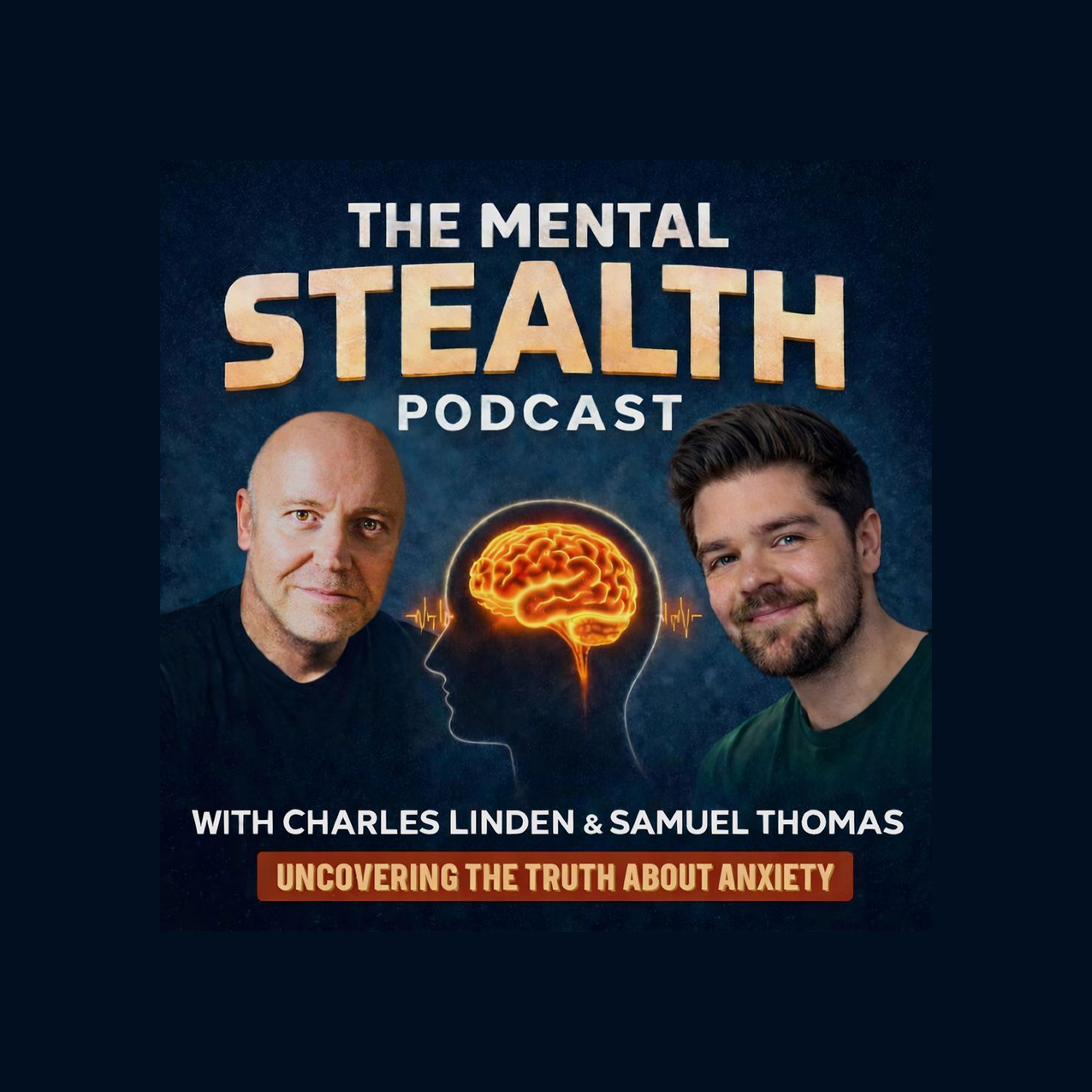
First watch our podcast episode above and understand that science is science and theory isn't close to it!
Any theory-based practice isn't a treatment, it's a justification of fees and nothing more.
Cognitive Behavioural Therapy (CBT) is one of the most widely recommended approaches for anxiety disorders.
It is endorsed by healthcare systems, taught in clinical training, and often presented as the “gold standard” treatment - they call it 'evidence-based practice' but evidence of what? Certainly NOT recovery.
Because of the positioning of it by psychology and medicine, many people arrive at CBT with a strong and understandable expectation:
This should work!
For individuals dealing with general stress, low mood, or situational worry, the conversations between CBT practitioner and patient can be reassuring - however, beyond that, CBT offers no provable benefits.
It's a true health scam involving, often well-meaning practitioners who have been sold a business on the basis of complete pseudoscience and malpractice.
It is important to be clear about what CBT is — and what it is not.
CBT is a management-based approach - but they don't tell you this... instead they boodt your expectations with phrases like 'evidence based practice' and 'god standard' designed to give you the hope of recovery whilst you or someone eklse (the tax payer for example) foots the bill for this expensive but wasteful therapy.
It is designed to help people cope with anxiety at best, but not to remove the underlying mechanism that produces it.
At its core, CBT works on the premise that anxiety is maintained by distorted or unhelpful thoughts and that by identifying these thoughts, challenging them, and replacing them with more balanced alternatives, the emotional response will diminish.
However, this is very scientifically wrong indeed. Catastrophically wrong.
Thoughts and emotions do interact, but one underlying truth underpins the fact that CBT cannot be helpful for anxiety conditions.
Anxiety is fear and fear is NOT an emotion.
The way we interpret situations can influence how we 'feel' but anxiety is not about how we 'feel'.
In a sentence, CBT does not make reference to how the fear response actually operates biologically.
Anyone who tries to convince you that CBT works or that you should try it at all is either lying to you or ignorant of the truth... neither is acceptable.
It is statistically better NOT to do CBT than to do it... it can only serve to make you much worse long-term or at the very best, continue to suffer.
The science
The fear system — which is responsible for anxiety — does not wait for conscious thought.
It reacts to predicted danger before rational thinking has time to engage.
It is activated solely and in isolation by your senses.
It is NOT emotion. In fact, emotions are deactivated largely during fear response... emotions serve only to 'get in the way' of survival instincts and actions.
When fear activates, it produces powerful physical responses.
These responses feel real because they are real.
And this is where CBT fails.
You may have been told to challenge your thoughts.
To question whether your fears are realistic.
To replace catastrophic thinking with something more rational.
But at the exact same time, your body is responding as if danger were present. It believes that it's under threat.
So you found yourself in a confusing position:
You know logically that nothing is wrong… But your body doesn’t agree.
That is not a failure of effort. That is a limitation of the CBT.
CBT addresses conscious thinking, but anxiety is driven by a non-conscious biological prediction system.
When that system continues to signal danger, reasoning alone cannot switch it off.
This is why most people experience a familiar pattern with CBT, initially only experiencing improvement through reassurance (Placebo)...
…followed by:
• Return of anxiety, phobias, obsessions and compulsions
• Persistent physical reactions
• Ongoing need to “manage” symptoms and thoughts
Over time, this can lead to a question: “Why hasn’t this worked for me?”
It is essential to say this clearly. It did not fail because you failed.
It did not fail because you didn’t try hard enough, think clearly enough, or apply the techniques correctly.
It failed because it was not designed to address the core mechanism keeping your anxiety active.
There is another important aspect to understand.
CBT encourages ongoing monitoring of thoughts and internal states.
For most individuals this increases self-focus.
When you are repeatedly asked to analyse your thoughts, check your reactions, and evaluate your internal experience, your attention turns inward.
And attention, in the context of anxiety, has consequences. The brain interprets focused attention as importance. So if you are constantly observing your thoughts, your body, your reactions — the brain will conclude: “There must be something wrong with me.”
This substantially reinforces the very vigilance that keeps the fear system active which means that CBT has no value.
It does not provide what sufferers are ultimately hoping for:
The complete removal of the anxiety.
If your experience of CBT was that it reassured you a little, but did not fully resolve your anxiety… your experience makes sense.
Your anxiety is not a reflection of your effort, your intelligence, or your ability to recover. It is the result of a biological system that has learned to predict danger incorrectly. And once that is understood properly, it becomes clear that anxiety does not need to be managed forever.
It can be removed!
Charles Linden
Stay connected with news and updates!
Join our mailing list to receive the latest news and updates from our team.
Don't worry, your information will not be shared.
We hate SPAM. We will never sell your information, for any reason.